
GLP2R Functional Cell-based Agonist Assay for compound screening and profiling via cAMP release measured by FRET technology.
GLP2R is the receptor for glucagon-like peptide-2 (GLP-2), an intestinotrophic hormone secreted postprandially by intestinal L-cells. Upon activation by GLP-2, GLP2R primarily stimulates adenylate cyclase, leading to increased intracellular cAMP levels and activation of downstream signaling pathways. GLP2R signaling promotes intestinal growth and repair, enhances nutrient absorption, improves mucosal barrier function, and increases intestinal blood flow. These effects contribute to the maintenance of gastrointestinal health and are therapeutically relevant in conditions associated with intestinal insufficiency. Therapeutic ligands such as Teduglutide are pharmaceutically developed to treat short bowel syndrome and intestinal failure associated with impaired nutrient absorption.
GLP2R
Glucagon-like peptide 2 receptor
HEK293
Transfected
HEK293 cells were transduced with a human Glucagon-like peptide 2 receptor (GLP2R). Stimulation of these cells with Teduglutide, a long-acting GLP-2 analog, results in agonistic activation of cAMP release, which can be measured by FRET technology, resulting in signal reduction upon cAMP release. The assay has been validated based on flow cytometric detection of target expression on cells and response to known GLP2R agonists.
Induction of cAMP release
| Compound | EC50 |
|---|---|
| Teduglutide | 54 pM |
Freiburg
More information can be found on our website GPCR Assay and Profiling Services
Reference compound activation of GLP2R
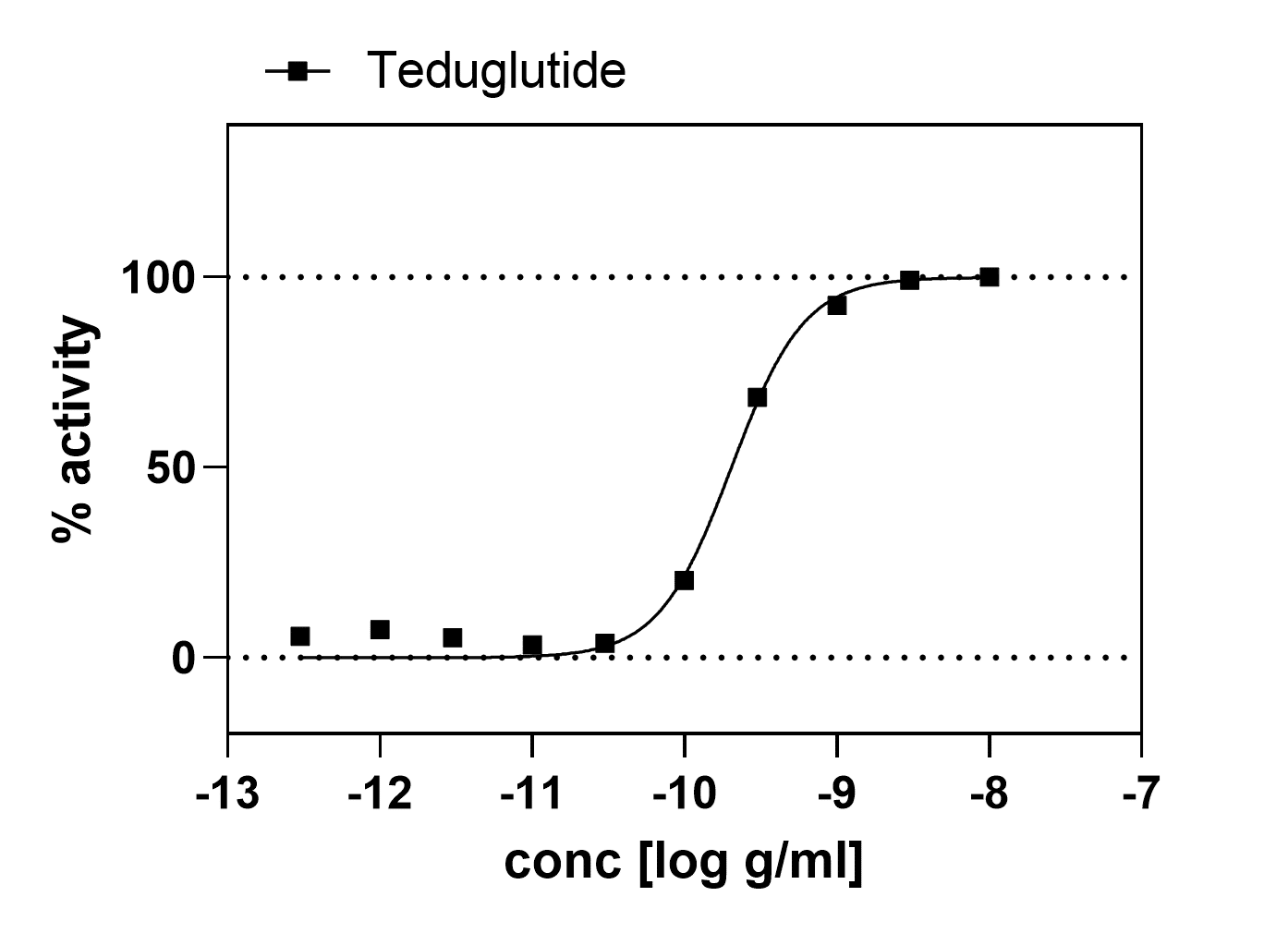
Teduglutide is known to specifically activate the cAMP response as an agonist of the glucagon-like peptide-2 receptor (GLP2R). cAMP levels were measured by FRET technology. The agonist was included in the validation process, and the cellular GLP2R assay generated highly reproducible EC50 values. The graph shows a representative result. A cAMP standard dose-response curve was generated in parallel.