
Read our latest blog: LinkLight™ Protein-Protein Interaction AssaysLearn More

CAR-T Cell Therapy Platform
Immuno-Oncology Services

CAR-T Cell Therapy Platform

CAR T-cell therapy, especially when directed against CD19 for B cell cancers, has demonstrated remarkable efficacy and received FDA approval in 2017. Nonetheless, despite its achievements, there exist challenges that must be addressed for CAR T-cells to realize their complete therapeutic potential against both solid tumors and haematological malignancies. Reaction Biology stands at the forefront of preclinical cancer immunotherapy, providing a wide array of CAR T-cell development services. Our dedicated cell therapy platform, crafted by our team of immuno-oncology specialists, employs a blend of in vitro and in vivo studies to accelerate your research endeavors.

We offer a range of services, including:

  • Evaluating the potency and pharmacokinetics of your CAR T candidate within in vivo models of cancer biology
  • Assessing the in vitro cytotoxicity of your CAR T candidate across established cancer cell lines
  • Delving into the activation and memory status of CAR T-cells to illuminate their therapeutic potential
  • Testing the efficacy of CAR T candidates in xenograft models of solid tumors

With our cell therapy platform’s capabilities, we empower you to refine and advance your therapeutic strategies, driving forward progress in cancer immunotherapy.

Strategies for successful
CAR T-cell therapy development

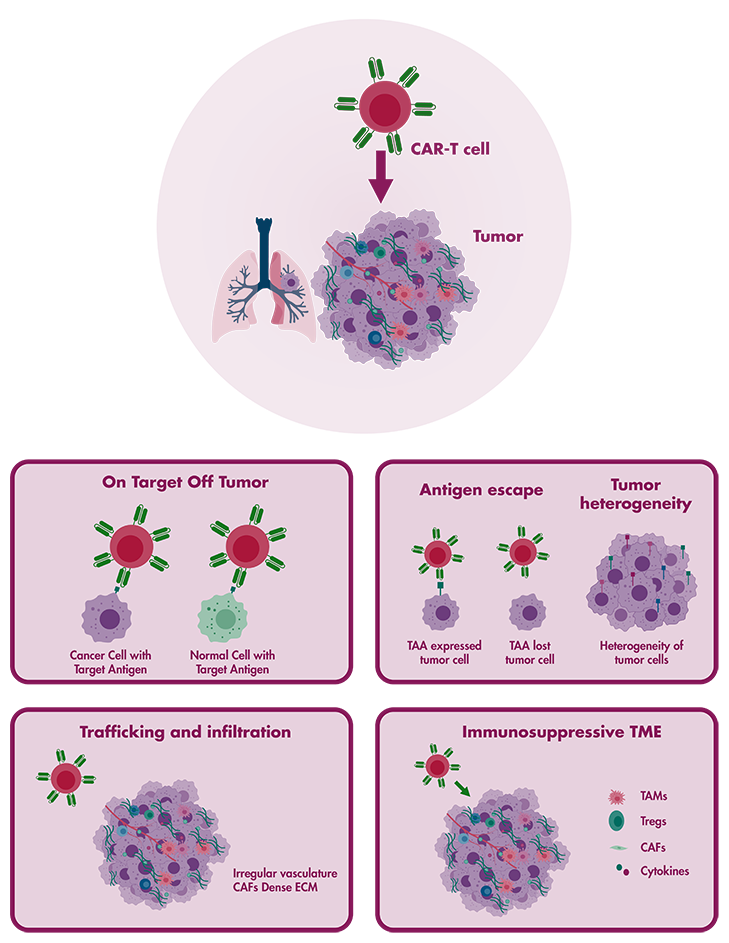
Barriers to effective CAR T-cell therapy encompass on-target off-tumor toxicities, limited anti-tumor activity across diverse tumor profiles, antigen escape, an immunosuppressive tumor microenvironment, and restricted trafficking and infiltration into tumors. Strategies to mitigate these challenges include:

  • Employing assays to evaluate tumor-specific post-translational modifications for refined targeting.
  • Assessing donor-to-donor heterogeneity in response to anti-tumor activity to optimize therapeutic efficacy.
  • Utilizing dual or tandem CARs to target multiple antigens concurrently.
  • Utilizing combination immunotherapy with CAR T-cells and checkpoint blockade, or engineering CAR T-cells to provide immunostimulatory signals.
  • Engineering CAR T-cells to enhance penetration through tumor stroma, or modulating chemokine receptors on CAR T-cells to respond to tumor-derived chemokines.

CAR T-cell therapy platform by Reaction Biology

  • Haematological malignancies
  • Solid tumor
Haematological malignancies

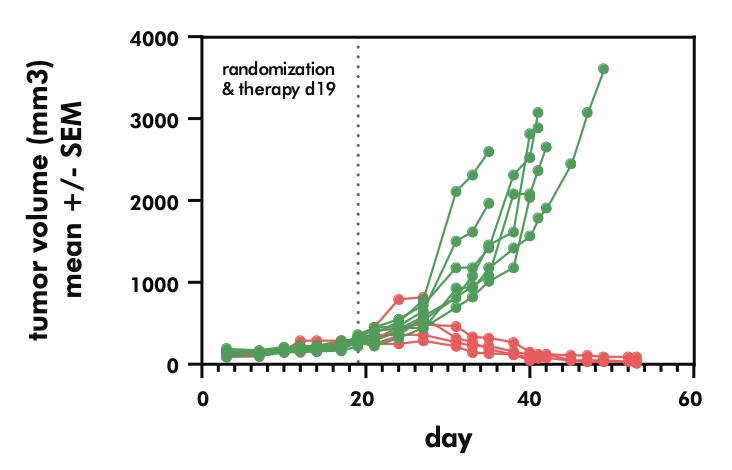
Our robust CD19 CAR T cell assay suite is ideal for you to study the efficacy and pharmacokinetic properties by monitoring the anti-CD19 CAR T-cells in various preclinical in vitro and in vivo assay models.

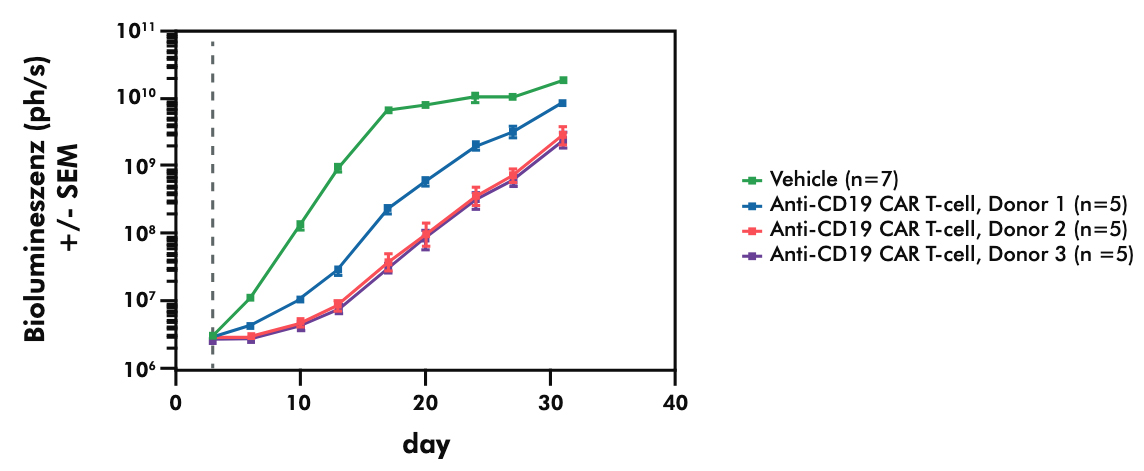
Case I: Assess donor-to-donor variability of CD19 CAR T-cells in B cell leukemia model

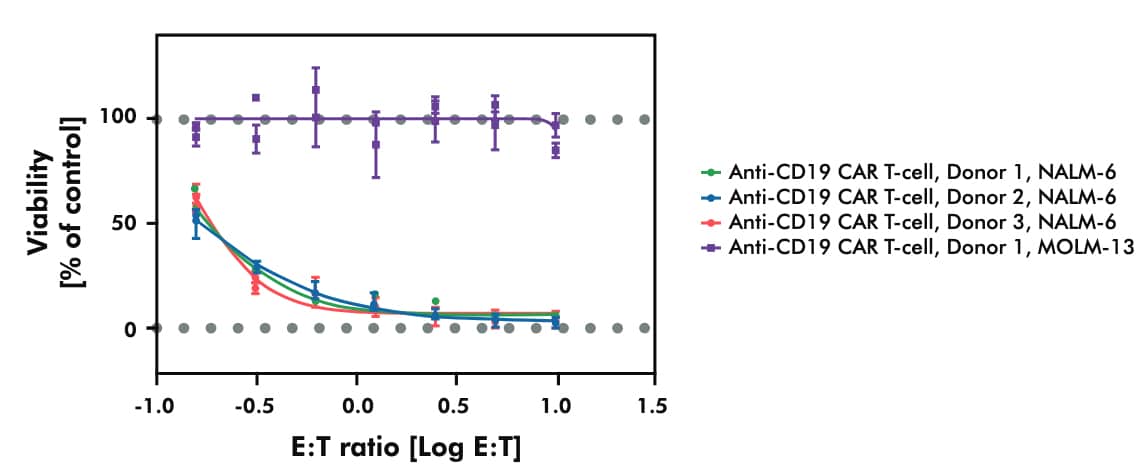
Case II: Measure in vitro cytotoxicity of CD19 CAR T-cells in NALM-6 and MOLM-13 cell lines

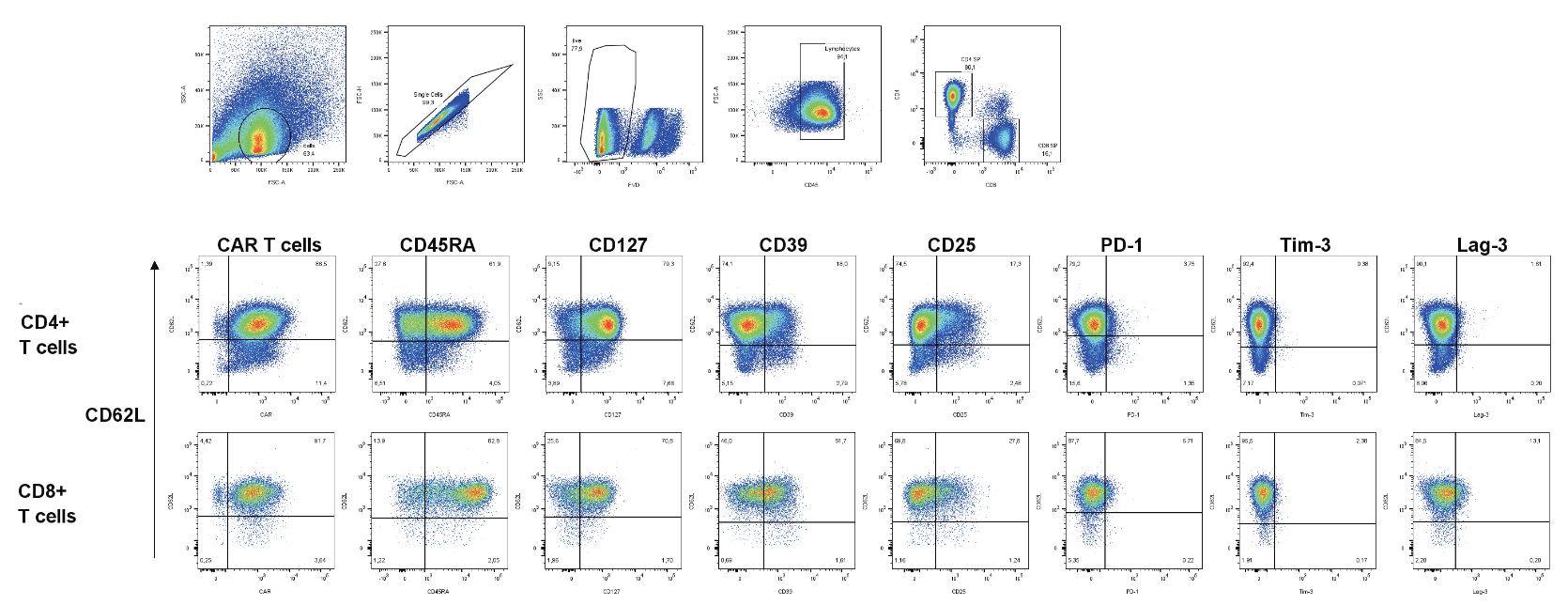
Case III: Evaluate the activation and memory status of CD19 CAR T-cells via flow cytometry

Solid tumor

Our scientists have rigorously optimized the development of various in vivo and in vitro service portfolio to evaluate novel CAR T-cells, with a specific focus on addressing the challenges associated with CAR T therapy for solid tumors.

Case IV: Anti-tumor activity of CAR T-cells in NSG mice engrafted with a subcutaneous THP-1 xenograft tumor model

FAQs

What is a cell therapy platform?

A cell therapy platform is an integrated set of technologies and processes designed to develop, manufacture, and test cell-based treatments. These platforms support therapies like CAR-T cells by providing standardized methods for cell modification, expansion, and quality assessment.

How does Reaction Biology's CAR-T therapy platform support cell therapy development?

Reaction Biology’s CAR-T therapy platform offers comprehensive services, including in vitro and in vivo assays, to evaluate the efficacy and safety of CAR-T cell therapies. Our platform facilitates the optimization of CAR constructs and supports preclinical development through robust testing methodologies.

What types of assays are available for CAR-T cell evaluation?

Our platform provides a range of assays, including cytotoxicity assays, cytokine release measurements, and proliferation studies, to assess CAR-T cell function. These assays help determine the potency and specificity of CAR-T cells against target cancer cells.

Can Reaction Biology's platform assist with both autologous and allogeneic CAR-T therapies?

Yes, our platform is equipped to support the development of both autologous (patient-derived) and allogeneic (donor-derived) CAR-T cell therapies, providing flexibility in therapeutic approaches.​

What are the advantages of using Reaction Biology's cell therapy platform?

Our platform offers rapid turnaround times, customizable assay development, and extensive experience in immuno-oncology, enabling efficient and reliable evaluation of CAR-T therapies.

How can I initiate a project with Reaction Biology's CAR-T therapy platform?

To start a project, please contact our team through the inquiry form on our website or reach out directly via email. Our experts will guide you through the process and discuss your specific needs.