Read our latest blog: LinkLight™ Protein-Protein Interaction AssaysLearn More

Cardiac Safety Assessment Services

Cardiac Safety Assessment Services

Cardiac Safety Testing from Ion Channel to Whole Heart
Tiered proarrhythmic liability: hERG FP binding, manual patch clamp, CiPA ion channel panels, Purkinje fiber action potentials, and Langendorff isolated heart.

Cardiotoxicity in Drug Discovery

Drug-induced cardiotoxicity remains a leading cause of compound attrition and post-market drug withdrawals. The most significant cardiovascular liability is Torsades de Pointes (TdP), a life-threatening ventricular arrhythmia associated with delayed cardiac repolarization and QT interval prolongation on the electrocardiogram.

Historically, cardiac safety screening focused primarily on the hERG potassium channel (Kv11.1), which conducts the rapid delayed rectifier current (IKr) critical for cardiomyocyte repolarization. However, hERG-centric screening can overestimate proarrhythmic risk, as compounds with multi-channel effects may have offsetting pharmacology. The Comprehensive in vitro Proarrhythmia Assay (CiPA) initiative addresses this limitation by integrating ion channel panels, in silico modeling, and confirmatory human cardiomyocyte studies to improve TdP risk prediction.

Regulatory Framework for Cardiac Safety
ICH S7B guidelines require nonclinical evaluation of QT/QTc prolongation and proarrhythmic potential prior to first-in-human studies. The CiPA paradigm, endorsed by FDA and under consideration by global regulators, recommends a mechanistic approach incorporating multiple cardiac ion channels (hERG, Nav1.5, Cav1.2) and functional endpoints to generate more predictive and clinically translatable cardiac safety data.

Ion Channel Screening

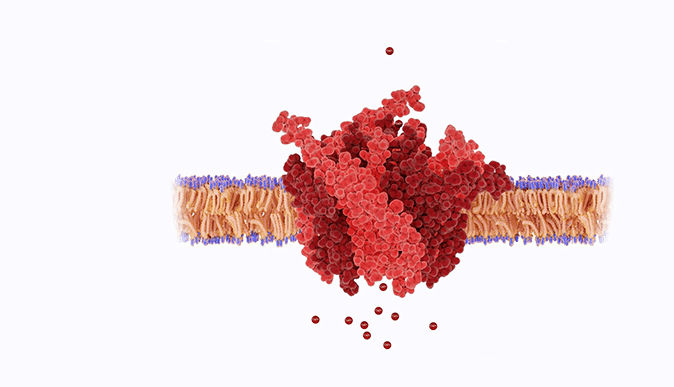
Ion channels regulate cardiac electrical activity by controlling sodium, potassium, and calcium ion flow across the cell membrane. Drug-induced ion channel modulation can disrupt the cardiac action potential and cause arrhythmias. Screening against key cardiac ion channels identifies proarrhythmic liability early.

Available Cardiac Ion Channel Targets

Target Gene Current Role
hERG KCNH2 IKr (rapid delayed rectifier K⁺) Primary repolarization determinant; main TdP risk target
Nav1.5 SCN5A INa (cardiac sodium) Depolarization phase; CiPA core channel
Cav1.2 CACNA1C ICa,L (L-type calcium) Plateau phase; CiPA core channel
Kv7.1/minK KCNQ1/KCNE1 IKs (slow delayed rectifier K⁺) Repolarization reserve

Action Potential Assays

Tissue-based action potential recording captures the net effect of multi-channel pharmacology on cardiac repolarization, providing physiologically integrated endpoints that single-channel assays cannot.

Purkinje Fiber Assay
Rabbit Purkinje fibers are specialized conduction tissue with long action potential durations, making them highly sensitive to repolarization abnormalities. Compound profiling detects effects on action potential duration, upstroke velocity, and resting membrane potential—parameters directly relevant to clinical QT prolongation.

Langendorff Isolated Heart

Ex vivo whole-heart preparation captures integrated cardiac function, electrophysiology, and contractility in an intact organ system—without confounding systemic influences.

ECG and Hemodynamic Endpoints
Retrograde aortic perfusion maintains cardiac function for several hours, enabling simultaneous ECG recording (PR, QRS, QT/QTc) and hemodynamic measurement (LVDP, contractility, heart rate). Detects proarrhythmic signals from multi-channel effects, metabolite activity, and indirect mechanisms not captured by cell-based assays.

Service Details

Assay Tiers

  • Tier 1: hERG Fluorescence Polarization binding (early screening)
  • Tier 2: hERG functional manual patch clamp (candidate confirmation)
  • Tier 3: CiPA ion channel panel (hERG, NaV1.5, CaV1.2)
  • Tier 4: Action potential assays via Purkinje fiber (tissue-level)
  • Tier 5: Langendorff ECG (organ-level)
Ion Channel Formats

  • Manual patch clamp (MultiClamp 700B) available
  • Single-concentration screen (typically 10 µM)
  • IC50 determination (6-point dose-response)
  • Temperature: room temperature or physiological (35–37°C)
  • Standard or custom voltage protocols

Assay Conditions

  • Single-concentration (10 µM) or 6-point IC50
  • Room temperature or physiological (35–37°C)
  • Standard or custom voltage protocols
  • Vehicle and positive controls in every assay

Data Deliverables

  • % inhibition or IC50 with Hill slopes
  • Concentration-response curves
  • Raw current traces (patch clamp)
  • ECG waveforms and intervals (Langendorff)

Flexible Assay Formats

Platform Advantages

Gold-Standard Patch Clamp

Manual patch clamp electrophysiology remains the regulatory gold standard for characterizing ion channel block. Gigaohm seal formation and whole-cell voltage clamp provide the highest fidelity measurements of compound effects on ionic currents, essential for IND-enabling cardiac safety packages.

CiPA-Aligned Ion Channel Panel

The CiPA core panel (hERG, Nav1.5, Cav1.2) captures the three most critical determinants of ventricular action potential morphology. Multi-channel profiling enables mechanistic interpretation of net proarrhythmic risk, avoiding overestimation from hERG-only screening.

Integrated Tissue and Organ Models

Action potential assays in Purkinje fibers and Langendorff isolated heart preparations provide physiologically integrated endpoints that complement single-channel data. These ex vivo models detect proarrhythmic signals from multi-channel effects, metabolite activity, and indirect mechanisms not captured by recombinant cell-based assays.

Flexible Platforms

Match platform to program stage and regulatory requirements. hERG FP binding for early triage. Manual patch clamp for lead confirmation and IND-enabling data. CiPA panels for mechanistic multi-channel assessment. Langendorff for organ-level confirmation.

Frequently asked questions

What is hERG and why is it important for cardiac safety?

hERG (human Ether-à-go-go-Related Gene) encodes the Kv11.1 potassium channel that conducts the rapid delayed rectifier current (IKr) in the heart. This current is critical for cardiac repolarization. Drug-induced hERG block can delay repolarization, prolong the QT interval on ECG, and predispose patients to Torsades de Pointes, a potentially fatal ventricular arrhythmia. Approximately 60% of drug candidates interact with hERG channels, making hERG screening a standard requirement in cardiac safety assessment.

What is CiPA and how does it improve cardiac safety testing?

The Comprehensive in vitro Proarrhythmia Assay (CiPA) is an FDA-supported initiative to improve prediction of drug-induced arrhythmia risk. CiPA integrates multi-channel ion channel data (hERG, Nav1.5, Cav1.2), in silico action potential modeling, and confirmatory human cardiomyocyte studies. This mechanistic approach addresses limitations of hERG-only screening by accounting for offsetting effects from multi-channel pharmacology, reducing false positives and improving clinical translatability.

What is the difference between hERG binding and functional patch clamp assays?

hERG binding assays measure displacement of a labeled ligand from the hERG channel pore, providing a rapid, high-throughput indication of binding affinity. Functional patch clamp assays directly measure the effect of compounds on ionic current flow through voltage-gated hERG channels, capturing inhibition potency, voltage dependence, and kinetic effects. Manual patch clamp is the regulatory gold standard for IND-enabling hERG assessment.

What is a Langendorff isolated heart preparation?

The Langendorff preparation is an ex vivo technique where an isolated heart (typically rabbit or guinea pig) is perfused through retrograde aortic cannulation with oxygenated nutrient solution. This maintains cardiac function for several hours, enabling measurement of ECG parameters (PR, QRS, QT intervals), left ventricular contractility, and arrhythmia induction in an intact organ system free from systemic neuronal and hormonal influences.

When should I use action potential assays versus ion channel screens?

Ion channel assays (patch clamp) characterize compound effects on individual channels with high resolution. Action potential assays in Purkinje fibers or cardiomyocytes capture the integrated effect of multi-channel pharmacology on cardiac repolarization. Use ion channel screens for mechanistic understanding and SAR; use action potential assays when you need physiologically integrated endpoints or suspect multi-channel effects.

Need Cardiac Safety Data for Your Program?

Contact our team to discuss study design, tiered screening strategies, and timelines for your cardiac safety assessment. From early hERG screens through CiPA-compliant ion channel panels and Langendorff studies.