Read our latest blog: LinkLight™ Protein-Protein Interaction AssaysLearn More

Cytochrome P450 Assay Services

Cytochrome P450 Assay Services

CYP450 Inhibition Screening for Drug-Drug Interaction Risk
Screen 14 CYP isoforms using P450-Glo™ luminescence. Reversible inhibition, time-dependent inhibition, and induction studies with 10-day turnaround.

The Role of CYP450 Enzymes in Drug Metabolism

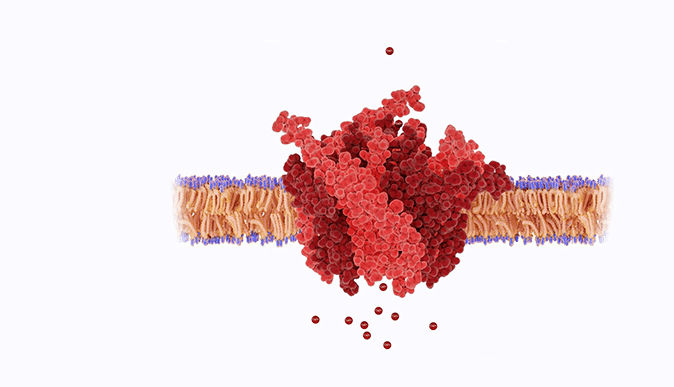
Cytochrome P450 (CYP450) enzymes are a superfamily of heme-containing monooxygenases responsible for the oxidative metabolism of approximately 75% of marketed drugs. Expressed primarily in the liver, these enzymes catalyze Phase I biotransformation reactions that introduce polar functional groups into lipophilic substrates, facilitating their elimination from the body.

Seven CYP isoforms (CYP1A2, CYP2B6, CYP2C8, CYP2C9, CYP2C19, CYP2D6, and CYP3A4) account for the majority of drug metabolism, with CYP3A4 alone involved in the clearance of over 50% of therapeutics. Because CYP-mediated metabolism directly influences drug exposure, efficacy, and toxicity, understanding a compound’s interaction with these enzymes is essential for predicting pharmacokinetic behavior and mitigating drug-drug interaction (DDI) risks.

Why CYP450 Inhibition Assessment Matters
When a drug inhibits a CYP isoform, it can reduce the metabolic clearance of co-administered drugs metabolized by that enzyme, leading to elevated plasma concentrations and potential toxicity. Conversely, induction of CYP expression can accelerate substrate clearance, reducing therapeutic efficacy. FDA, EMA, and ICH M12 guidelines require in vitro assessment of CYP inhibition and induction potential before clinical trials, making early-stage CYP profiling a regulatory necessity.

Service Details

Platform Advantages

Broad Isoform Coverage

Profile compounds against 14 pharmacologically relevant CYP isoforms, including the seven major drug-metabolizing enzymes (CYPs 1A2, 2B6, 2C8, 2C9, 2C19, 2D6, 3A4) plus CYPs 2A6, 2E1, 3A5, 4A11, 2J2, 19A, and 4F3B. Complete coverage supports comprehensive DDI risk assessment.

High-Sensitivity Luminescent Detection

P450-Glo™ assay technology (Promega) provides superior sensitivity and dynamic range compared to fluorescent or absorbance-based methods. Luminescent readouts minimize compound interference from autofluorescence or optical quenching.

Recombinant Enzyme Consistency

Assays utilize recombinant CYP enzymes expressed in baculovirus-infected insect cells (supersomes), ensuring consistent enzyme activity across batches. Standardized enzyme preparations eliminate lot-to-lot variability inherent in liver microsome pools.

Flexible Screening Formats

Choose single-concentration screens at 10 µM for rapid hit triage or 10-point dose-response IC50 determinations for quantitative potency ranking. Custom concentration ranges and time-dependent inhibition (TDI) assessments available upon request.

Frequently asked questions

What is a CYP450 inhibition assay and why is it important?

A CYP450 inhibition assay measures a compound’s ability to reduce the activity of cytochrome P450 enzymes responsible for drug metabolism. These assays are essential for predicting drug-drug interactions, as inhibition of CYP enzymes can elevate plasma concentrations of co-administered drugs, potentially causing toxicity. Regulatory agencies require CYP inhibition assessment before clinical trials.

Which CYP isoforms should I screen my compounds against?

FDA and EMA guidelines recommend screening against the seven major drug-metabolizing CYP enzymes: CYP1A2, CYP2B6, CYP2C8, CYP2C9, CYP2C19, CYP2D6, and CYP3A4. Together, these isoforms are responsible for metabolizing approximately 90% of marketed drugs. Additional isoforms may be relevant depending on your therapeutic area or anticipated co-medications.

What is the difference between direct inhibition and time-dependent inhibition (TDI)?

Direct (reversible) inhibition involves rapid, equilibrium-based binding of an inhibitor to the CYP enzyme active site. Time-dependent inhibition (TDI) occurs when a compound requires metabolic conversion to form a reactive intermediate that irreversibly inactivates the enzyme. TDI is of greater clinical concern because enzyme activity can only be restored through de novo protein synthesis, leading to prolonged DDI effects.

What assay format do you use for CYP450 inhibition screening?

We use P450-Glo™ luminescent assay technology with recombinant human CYP enzymes (supersomes). This format provides high sensitivity, excellent reproducibility, and minimal compound interference compared to fluorescent or absorbance-based methods. Assays are run in 96- or 384-well microplates and are compatible with high-throughput workflows.

What is the turnaround time for CYP450 assays?

Standard turnaround is 10 business days from compound receipt. Expedited timelines may be available for urgent programs—contact us to discuss your project requirements.

Ready to Assess Your Compound's CYP Liability Profile?

Contact our scientific team to discuss study design, panel selection, and timelines for your CYP450 inhibition screening project. Flexible formats available for hit triage through comprehensive assessments.