
Reaction Signals Q2 2026 Newsletter

Headlines In This Issue
Scientific Spotlight: Immuno-Oncology
Explore how tumor-associated macrophages influence therapeutic outcomes and why comprehensive preclinical models are essential for IO drug development
Featured Research: AACR 2026 Poster
New data on macrophage phagocytosis and efferocytosis assays for modeling TAM behavior and evaluating immunomodulatory therapeutics
New at Reaction Biology
Expanded InVEST safety panel for comprehensive off-target profiling across kinases, GPCRs, ion channels, transporters, enzymes, and nuclear receptors
Important Dates
Compound submission deadlines for multiple screening panels plus upcoming conferences.
Scientific Spotlight

Immuno-Oncology and the Tumor Microenvironment
Immune checkpoint inhibitors targeting PD-1, PD-L1, CTLA-4, and LAG-3 have established immunotherapy as a cornerstone of modern oncology. However, response rates vary substantially, with many patients experiencing primary or acquired resistance driven by the tumor microenvironment (TME).
Tumor-associated macrophages (TAMs) are a critical TME component. Depending on their activation state, macrophages can exert both pro-tumorigenic (M2-like) and anti-tumorigenic (M1-like) effects. TAMs adopt immunosuppressive phenotypes promoting tumor growth, angiogenesis, metastasis, and therapy resistance. Their plasticity and abundance make them attractive therapeutic targets, either through reprogramming toward anti-tumoral states or depleting tumor-supportive functions.
Understanding macrophage behavior requires reliable in vitro assays modeling phagocytosis, efferocytosis, cytokine secretion, and tumor cell interaction.
Featured Research
POSTER
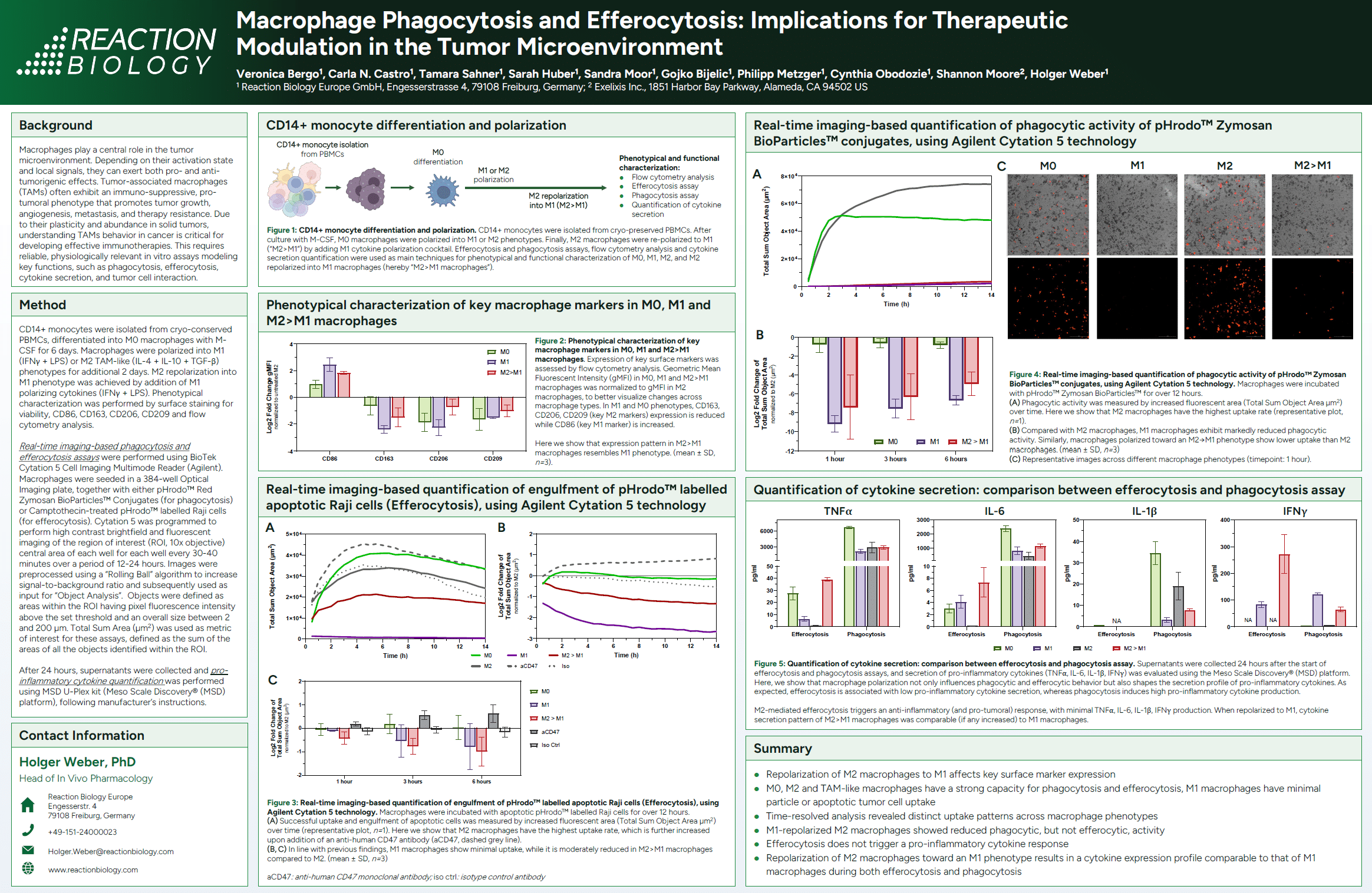
Macrophage Phagocytosis and Efferocytosis: Implications for Therapeutic
Modulation in the Tumor Microenvironment
Presented at AACR 2026 | Poster #3398 Veronica Bergo, Carla N. Castro, Tamara Sahner, Sarah Huber, Sandra Moor, Gojko Bijelic, Philipp Metzger, Cynthia Obodozie, Shannon Moore, Holger Weber
Our macrophage phagocytosis and efferocytosis assays assess compound impact on uptake activity across human M0, M1, M2, and TAM-like macrophages, providing critical insights for immunomodulatory therapeutic development.
Methodology: CD14+ monocytes isolated from cryopreserved PBMCs are differentiated into M0 macrophages (M-CSF, 6 days), then polarized into M1 (IFN-γ + LPS), M2 (IL-4 + IL-13), or TAM-like (IL-4 + IL-10 + TGF-β) phenotypes. Compound-treated cells are incubated with pHrodo™ bioparticles or apoptotic tumor cells for real-time fluorescence quantification (Cytation 5, 12–24 hours).
Key Findings:
- Phenotype-dependent activity: M0, M2, and TAM-like macrophages show strong phagocytic/efferocytic capacity; M1 macrophages show minimal uptake
- Distinct kinetics: M0 and M2 rapidly internalize targets (2–4 hours); M2 maintains sustained activity up to 12 hours with higher overall uptake
- Repolarization impact: M2→M1 conversion via LPS/IFN-γ markedly reduces phagocytic capacity
- CD47 modulation: Anti-CD47 antibody significantly enhances efferocytosis of Raji tumor cells
- Cytokine profiles: Efferocytosis is associated with lower inflammatory cytokine release compared to phagocytosis, consistent with its anti-inflammatory role
What this means for your program: Macrophage phenotype strongly influences phagocytic and efferocytic behavior. Strategies modulating polarization or relieving inhibitory signals (CD47 blockade) support TAM-targeted therapeutic investigation within a physiologically relevant system.
BLOG

Immune Profiling as the Common Language of Modern Pharmacology
Immune profiling has expanded beyond oncology and autoimmune research. Immune pathways are now recognized as core disease drivers across fibrosis, neurodegeneration, metabolic dysfunction, and cardiovascular disease.
Emerging modalities, such as multispecific biologics, protein degraders, RNA therapeutics, and stroma-directed agents, engage pathways intersecting with immune circuits, even when not overtly immunological. Early in vitro immune profiling surfaces context-dependent effects when study design and prioritization remain flexible.
INDUSTRY INSIGHTS
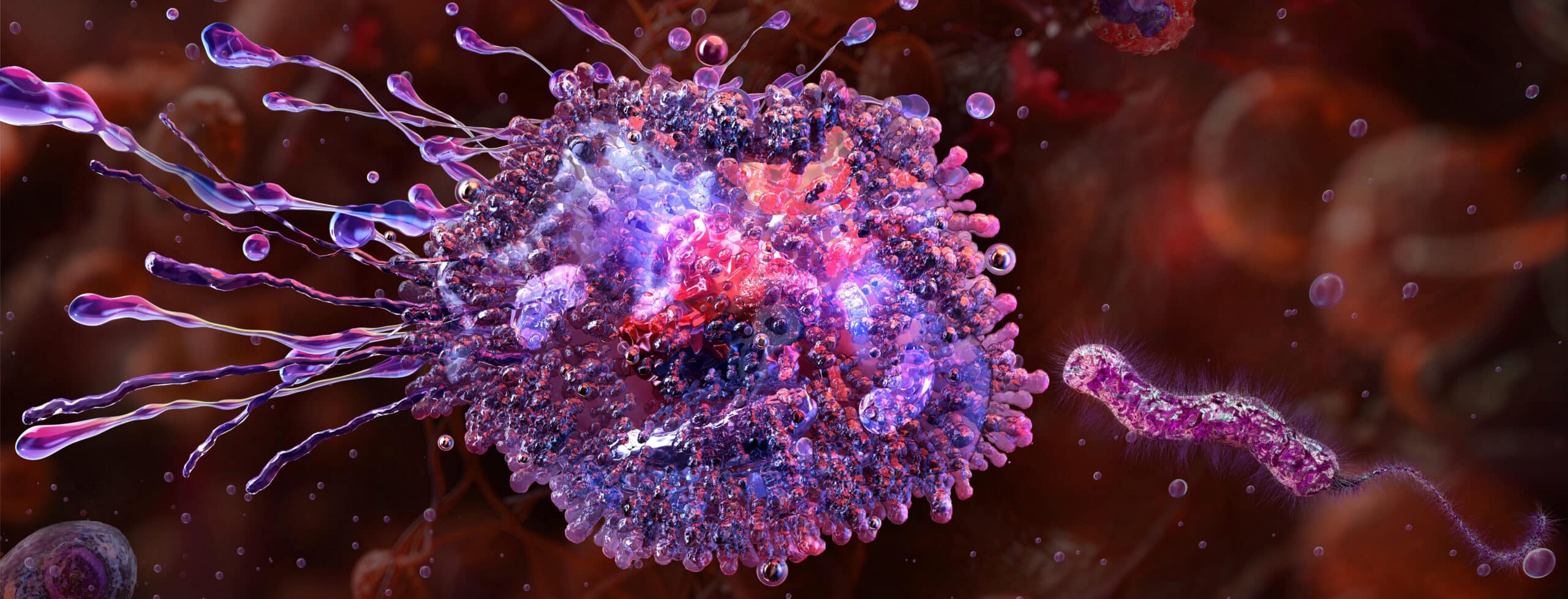
Checkpoint Inhibitors and TAM-Targeted Therapeutics
As immuno-oncology advances into combination regimens and novel targets, understanding resistance mechanisms, including the immunosuppressive role of tumor-associated macrophages, has become critical for clinical success. We’re highlighting three recent publications on current advances and future directions.
Immune checkpoint inhibitors for solid tumors and lymphoma (2000–2025) A 26-year review of ICI evolution covering biomarker discovery, immune-related adverse events, resistance mechanisms, and emerging targets including LAG-3 and bispecific antibodies.
Journal of Hematology and Oncology, 2025 →
The role of immune checkpoint inhibitors in cancer therapy Examines how ICIs restore T cell-mediated antitumor responses, multiomics-driven biomarker frameworks, emerging targets (TIM-3, LAG-3, TIGIT), and combination strategies for overcoming TME-mediated resistance.
Dual roles and therapeutic targeting of tumor-associated macrophages Reviews TAM plasticity and polarization states, with therapeutic strategies including CSF-1R inhibition, CCL2 blockade, and nanoparticle-mediated reprogramming—particularly promising in combination with checkpoint inhibitors to relieve immunosuppression and enhance T-cell activation.
Signal Transduction and Targeted Therapy, 2025 →
What this means for your program: Standard single-pathway assays often miss resistance mechanisms driven by the tumor microenvironment. Comprehensive approaches, including TAM-targeted assays and real-time monitoring across multiple cell models, enable deeper mechanistic insight and improve translational predictability for combination therapy design.
Product Highlights
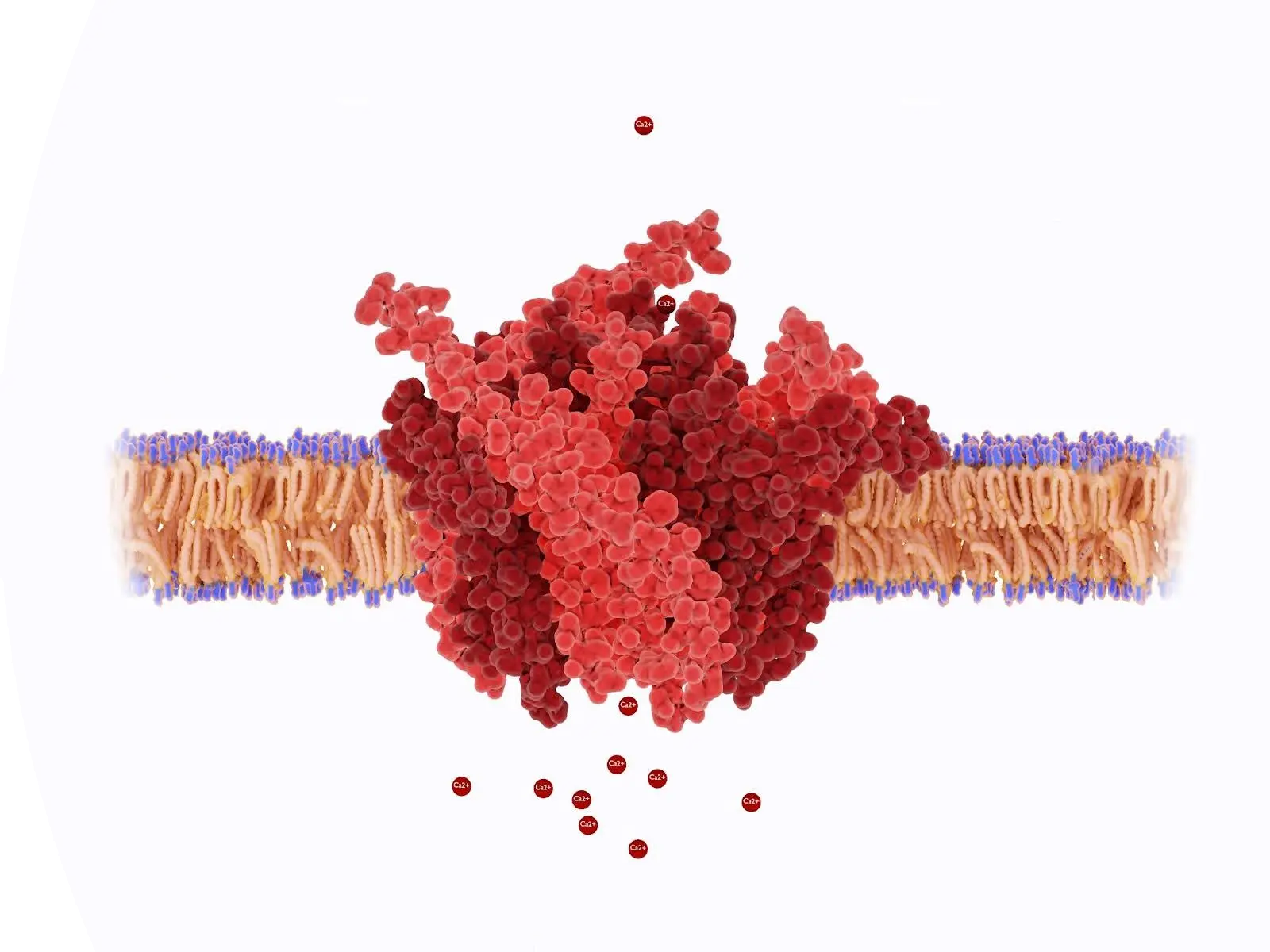
InVEST Safety Portfolio
Reaction Biology’s InVEST (In Vitro Evaluation of Safety and Toxicity) platform delivers comprehensive off-target screening across GPCRs, ion channels, transporters, kinases, nuclear receptors, and other enzymatic targets, covering the Bowes/Brennan* industry standard for detecting potential adverse effects early in drug development.
Six Panels for Every Stage
- InVEST18 — Core Liability Screen
- InVEST44 — Hit-to-Lead Essentials
- InVEST59 — Extended Selectivity
- InVEST77 — Comprehensive Profiling
- InVEST CYP — Metabolic Safety Panel
- InVEST PDE — Phosphodiesterase Panel
Kinases profiled at physiological 1mM ATP. All panels return data in 10 business days from our Malvern, PA facility.
Cardiac Safety Manual and automated patch clamp (hERG, Nav1.5, Cav1.2) with CiPA-aligned profiling for regulatory-grade cardiac liability data.
Why InVEST for IO? Immuno-oncology therapeutics require careful off-target profiling to balance antitumor activity against immune-related adverse events. Early identification of secondary pharmacology risks supports de-risked lead selection with confidence in clinical translatability.
Upcoming Screening Schedule
Ensure your compounds are included in our upcoming screening runs.
Please note the following deadlines for sample submission.
Bromodomain Full Panel
May 29 | July 2 | July 31
Protease Full Panel
May 22 | June 19 | July 24
Phosphodiesterase (PDE) Full Panel
May 22 | June 19 | July 24
ProLiFiler™ Cancer Cell Panel
June 18 | July 16 | September 3
Histone Deacetylase (HDAC) Full Panel
May 29 | July 2 | July 31
InVEST18/44/59/77 Safety Panels
June 5 | July 10 | August 7
Methyltransferase Full Panel
May 15, 29 | June 12 | July 2
Kinase Panel Screening (US Facility):
Full Panel: May 27 | June 10 | July 1, 15
1 mM ATP (Wildtype, Mutant, Atypical, Lipid, and Diacylglycerol): May 20 | June 17 | July 22
Diversify Panel: June 3 | July 8 | August 5
Kinase Panel Screening (German Facility)
Full Panel (Wild Type, Mutant, Diversify, Lipid): May 28 | June 25 | July 30
Request a quote for compound screening →
Conferences and Events
LRIG Philadelphia
- Date & Location: May 19th | King of Prussia, PA, USA
- Booth: 51
- Presentation: InVEST44™ is a cost-effective in vitro safety panel that identifies off-target effects in early-stage drug discovery by Julian Wooltorton, PhD, Director of In Vitro Safety
Computational and Medicinal Chemistry by the Lake
- Date & Location: June 2nd-4th | Kuopio, Finland
- Booth: 4
CPHI Americas
- Date & Location: June 2nd-4th | Philadelphia, PA, USA
- Attendee: Haiching Ma, PhD
Discovery & Development Europe
- Date & Location: June 15th-16th | Berlin, Germany
- Booth: 14
- Featured Content: Presentation on June 16th from 12:30PM-12:55PM in the ADC Discovery and Development Track
ESTIV 2026
- Date & Location: June 29th-July 2nd | Maastricht, Netherlands
- Attendee: Luisa Duque, PhD
About Reaction Biology
Experts in Supporting Innovation
Reaction Biology is a consultative drug discovery and development CRO that elevates the standard for collaboration, scientific rigor, and data quality.
For 25 years, we’ve helped advance novel therapeutics by delivering reliable, timely data to 2,500+ clients worldwide. Hundreds of therapies submitted for IND were supported by our science, because a partner you can trust helps reduce risk at every milestone.
With four strategically positioned facilities across the US and Europe, an integrated assay portfolio spanning biochemical, cellular, biophysical, safety, and in vivo capabilities, and gold-standard methodologies backed by ISO 9001:2015 quality management, we deliver the speed and scientific rigor your program demands.
Let’s discover together.
*References
Bowes, J. et al. Reducing safety-related drug attrition: the use of in vitro pharmacological profiling. Nat. Rev. Drug Discov. 11, 909–922 (2012)
Brennan RJ et al. The state of the art in secondary pharmacology and its impact on the safety of new medicines. Nat. Rev. Drug Discov. 23, 525–545 (2024)


