
Read our latest blog: LinkLight™ Protein-Protein Interaction AssaysLearn More

Syngeneic Tumor Models
Immuno-Oncology Services

Syngeneic Mouse Models

Syngeneic mouse models are used for efficacy testing of immuno-oncology drugs as well as the investigation of the effects of conventional anti-cancer drugs on the immune system. In a syngeneic model, the tumor originated from a mouse of the same genetic background as the immuno-competent recipient mouse. With the tumor microenvironment and transplanted cells belonging to the same strain, syngeneic mouse models are powerful immuno-oncology models for investigating responses to anti-cancer therapies.

Our panel of cell line-derived syngeneic tumorscomprisesubcutaneous, subQperior, orthotopic, and metastasis models. Our innovative subQperiorTMtumor models are based on cell implantation into the mammary fat pad and feature reduced tumor ulceration and yield more homogeneous tumor growth and ultimately outstanding statistical evaluation of drug efficacy testing.

In addition to standard syngeneic mouse models, Reaction Biology also offers proprietary tissue-based immuno-oncology Mouse-derived Isograft Models (MDI).

  • Science-driven study setup with a focus on cost-effective, reproducible and meaningful results
  • Custom-tailored reports written by Ph.D. level medical writers will be provided for every in vivo study
  • All procedures entail a meticulous documentation process according to GV-Solas requirements and are in-line with the ISO 9001 certification
  • Regular syngeneic panel screening of 6 syngeneic tumor models for economic efficacy evaluation of new immuno-oncology drug candidates
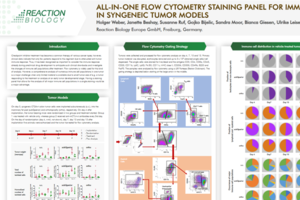
  • Comprehensive flow cytometry analysis capacity with 17 marker staining panel

Reaction Biology has a global network of business development managers to understand your specific research needs and help determine the right mouse models for your immunotherapy research thrust. Throughout the study, you will work with just one team of scientists to facilitate consistent communication. Inquire for our models today.

Options for Tumor Placement

FAQs:

What is a syngeneic mouse model?

A syngeneic mouse model involves transplanting tumor cells from a mouse into another genetically identical, immunocompetent mouse strain. This approach allows researchers to study tumor development and treatment responses within a fully functional immune system, providing insights into immuno-oncology therapies.

Why are syngeneic mouse models important in immuno-oncology research?

Syngeneic mouse models are crucial in immuno-oncology research because they maintain an intact immune system, allowing for the evaluation of immune responses to cancer therapies. This makes them valuable for studying the efficacy of immunotherapies and understanding tumor-immune system interactions.

What are the advantages of using syngeneic mouse models?

Advantages of syngeneic mouse models include the presence of a fully functional immune system, genetic consistency between tumor and host, cost-effectiveness, and the ability to study tumor-immune interactions in a controlled environment. These models are particularly useful for evaluating immunotherapies.

What are the limitations of syngeneic mouse models?

Limitations of syngeneic mouse models include differences between mouse and human immune systems, limited availability of murine tumor cell lines, and the potential for tumors to grow more rapidly than in human cases. These factors can affect the translatability of results to human clinical settings.

Can syngeneic mouse models be used to study combination therapies?

Yes, syngeneic mouse models are suitable for studying combination therapies, including the effects of combining immunotherapies with chemotherapy, radiation, or targeted agents. Their intact immune system allows for the assessment of synergistic effects and potential toxicities in a preclinical setting.