
GPCR Assays
G protein-coupled receptors (GPCR) represent the largest individual family of targets for currently approved medications. Recent advances in GPCR pharmacology, including biased signaling and allosteric modulators, have become increasingly important tools for GPCR assay development. Reaction Biology offers GPCR screening services to progress drug discovery research in the area of GPCR biology and pharmacology.
- We offer GPCR assay development, high-throughput screening, and SAR support services.
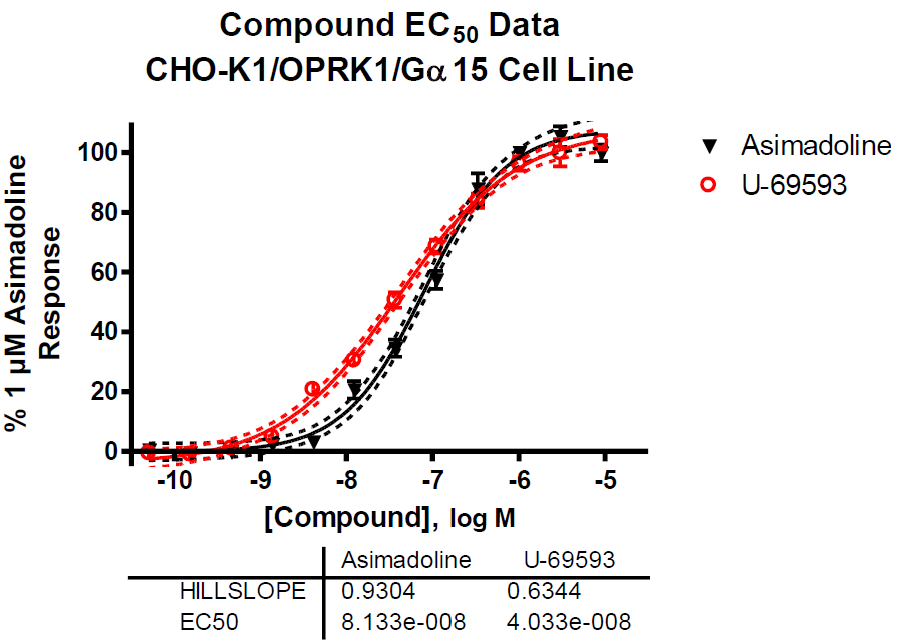
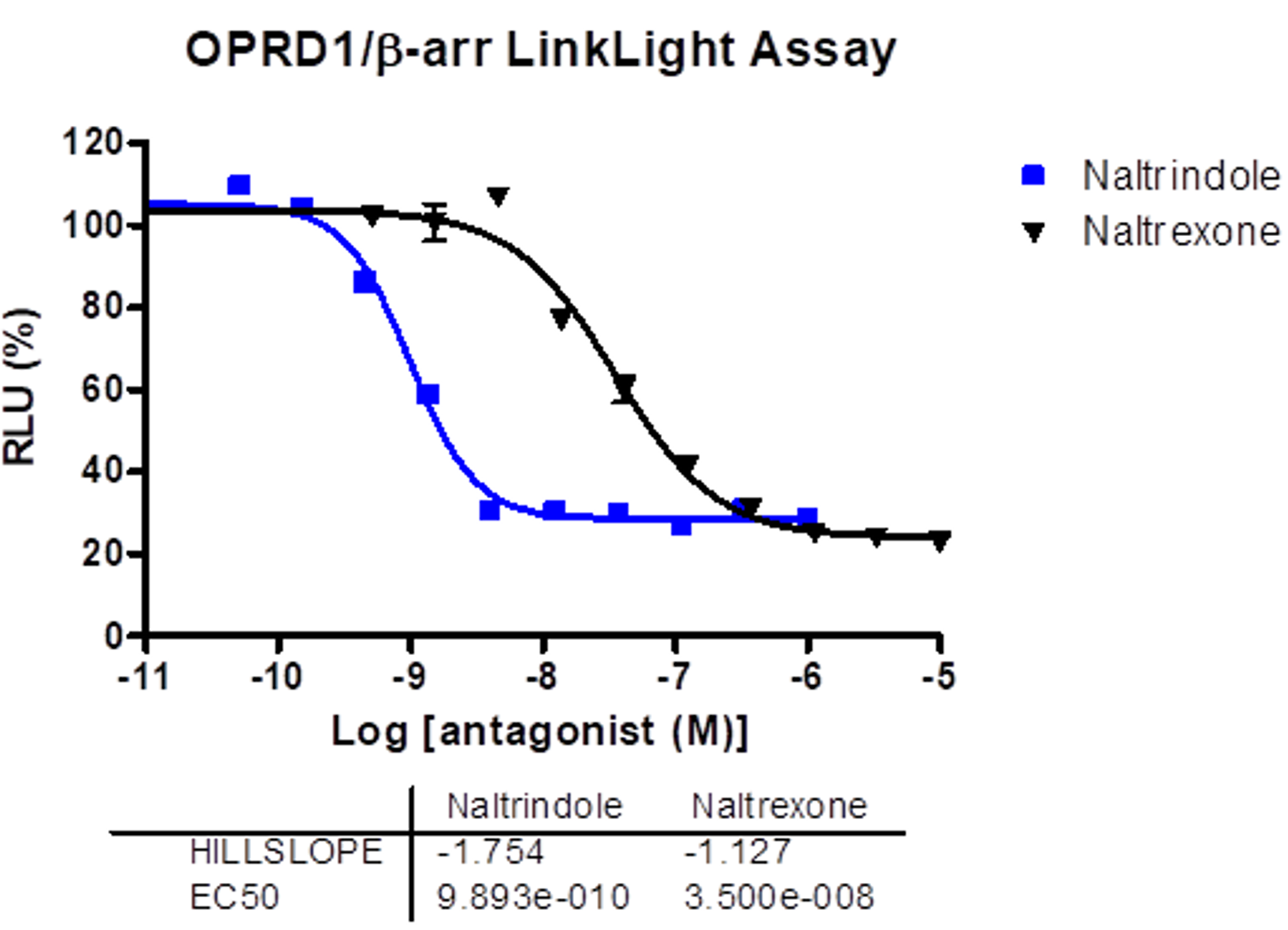
- Transmembrane signaling assay formats can be readily established for your receptor of interest including calcium mobilization, β-arrestin translocation, cAMP generation, and inositol 1-monophosphate (IP1) generation


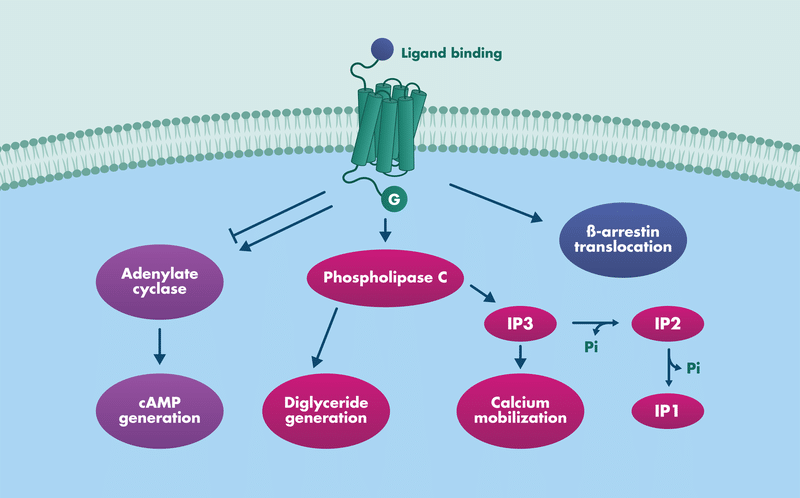
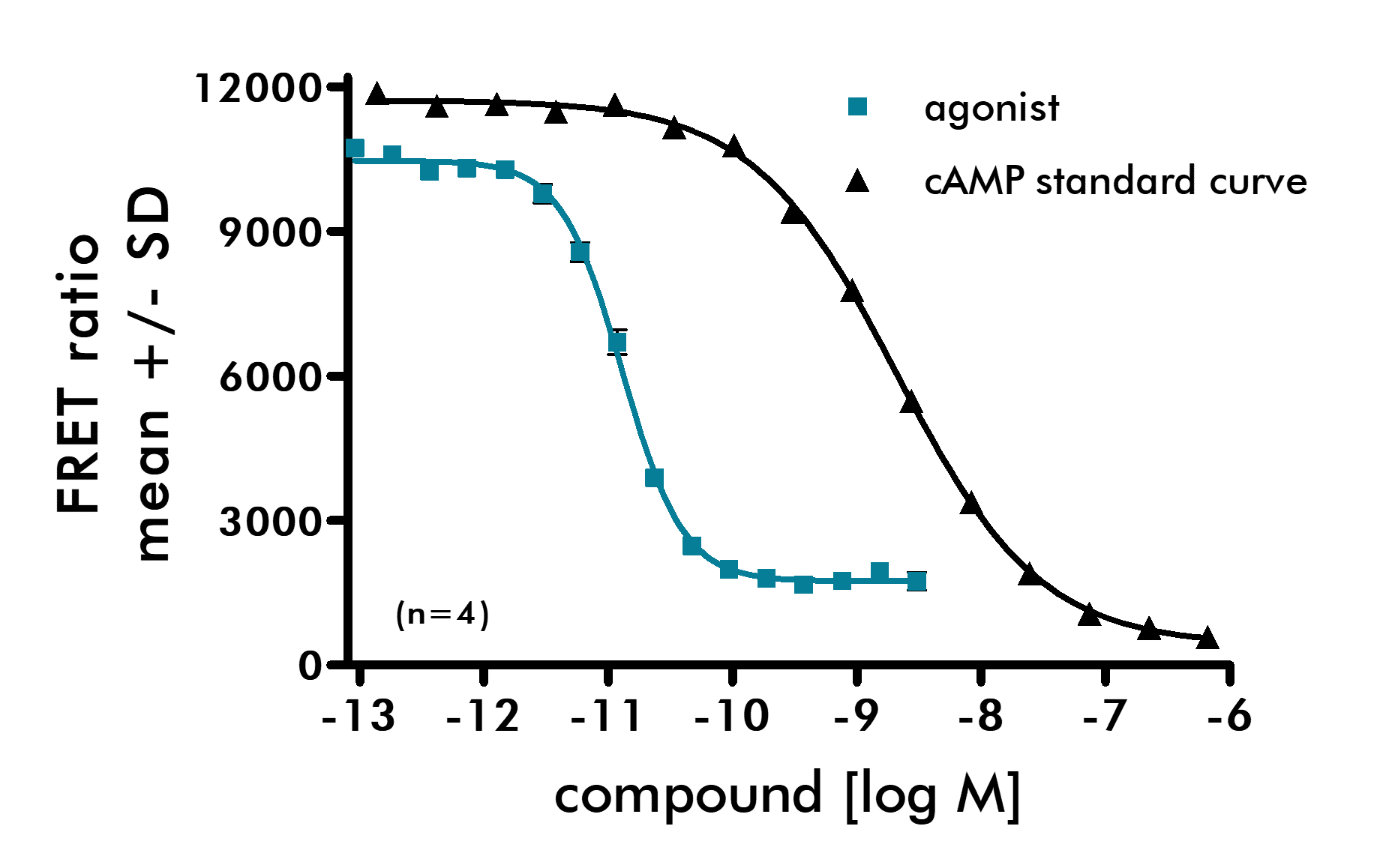
 Cells engineered to express Gq-coupled receptors of interest are stimulated with a receptor agonist to elicit the generation of IP3. Given that IP3 is not metabolically stable, a surrogate marker of pathway activation (the metabolically stable IP1 (inositol 1-monophosphate) is measured. IP1 can be conveniently quantified using a TR-FRET-based competitive immunoassay as depicted above.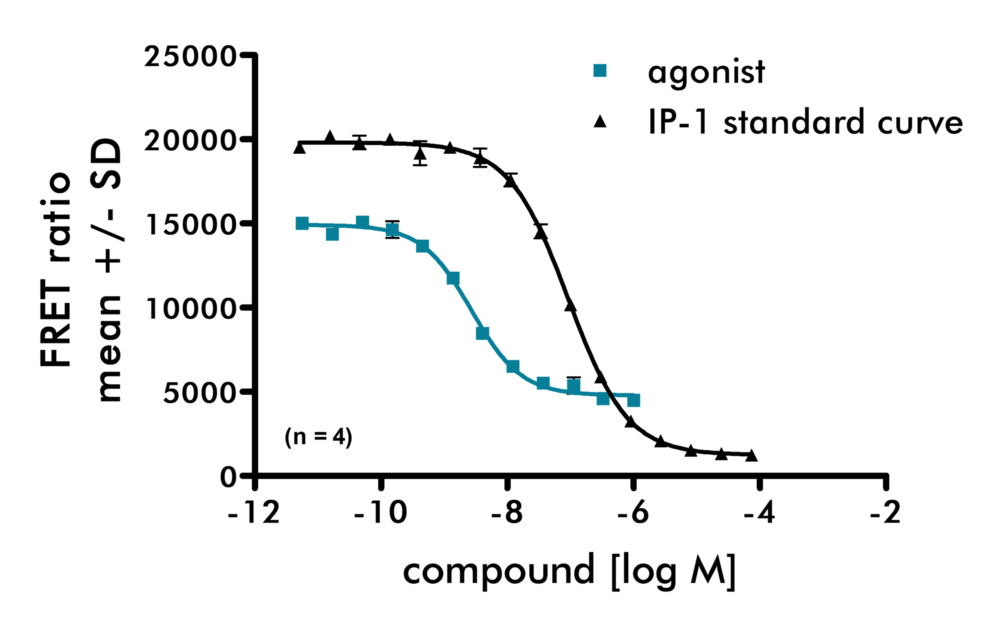
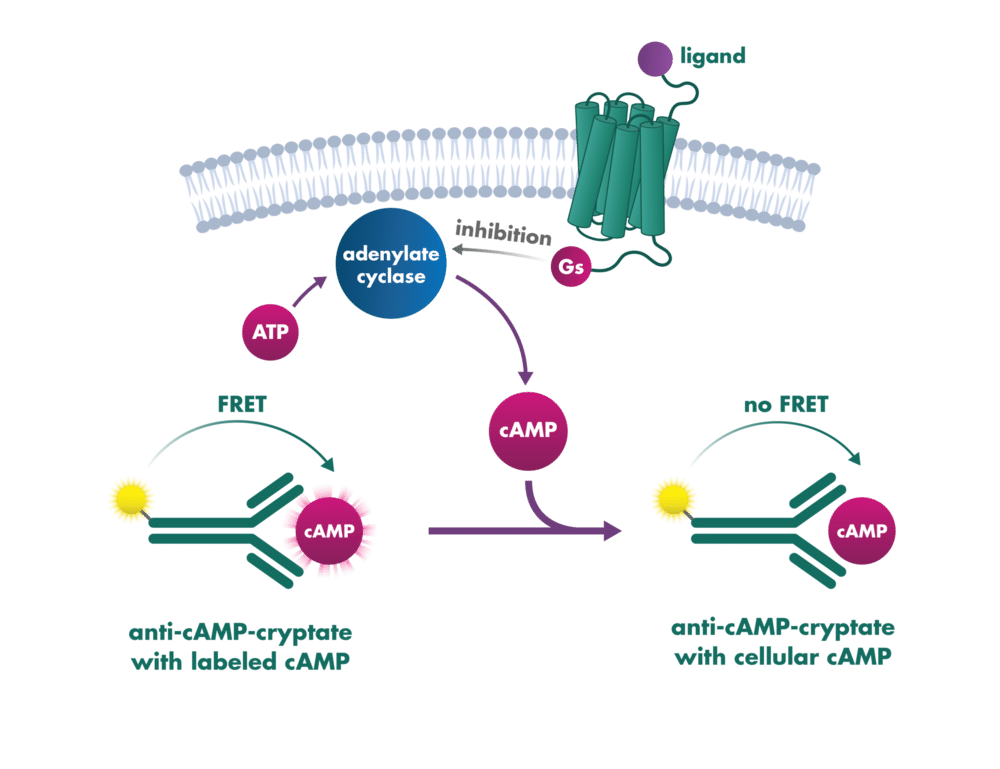 Cells engineered to express Gs-coupled GPCRs of interest are stimulated with an agonist to affect cellular activation. cAMP can be accurately measured by a variety of standard detection methods including a competitive immunoassay wherein cellular cAMP competes with a labeled cAMP probe to bind to an anti-cAMP-cryptate generating a FRET signal.